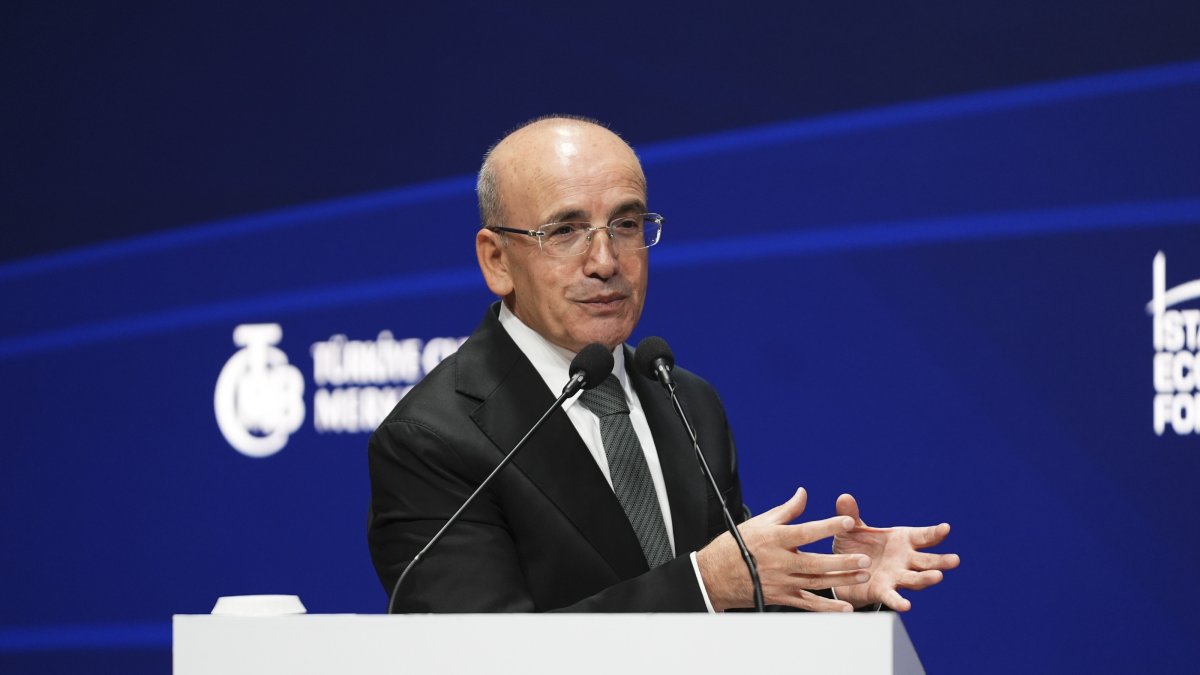
Türkiye is prioritizing macro-financial stability and a tight fiscal policy to mitigate the effects of recent global challenges, including rising energy prices and geopolitical conflicts, according to Treasury and Finance Minister Mehmet Şimşek. He spoke at the Istanbul Economic Forum, emphasizing the importance of maintaining a strict fiscal stance to absorb external shocks.
Read More
The Central Bank of the Republic of Türkiye (CBRT) organized the forum, which brings together central bank governors and senior policymakers worldwide, including representatives from the U.S. and the U.K.
Şimşek characterized current global economic difficulties as significant, particularly highlighting the current energy crisis as one of the largest ever encountered. He noted a variety of structural headwinds facing economies worldwide, including conflicts, trade protectionism, high national debts, and unfavorable demographic trends.
Despite the regional conflicts around Türkiye, the country plans to increase defense spending by 229% in its 2027 budget, surpassing the central bank's 21% inflation target for the upcoming year, to enhance national deterrence capabilities. The minister revealed that research and development investments in defense projects have exceeded $100 billion, aiming for Türkiye to become one of the top ten defense exporters globally.
He also mentioned Türkiye's status as one of the top three nations for official development assistance and its significant diplomatic presence. He highlighted that Turkish Airlines operates to more destinations than any other airline.
Significant infrastructure investments include an $8 billion railway project intended to enhance connectivity between Beijing and London. Additionally, the Turkish government is encouraging neighboring countries to invest in new transportation corridors.
In the energy sector, Türkiye has invested in natural gas and oil pipelines to secure energy availability. Renewables now account for nearly 60% of electricity generation, with an ambitious electrification target of 35% set, up from 23%, as Türkiye prepares to host COP31.
In response to global trade protectionism, Türkiye has expanded its network of free trade agreements, currently numbering 54, with negotiations ongoing with Japan, Indonesia, and the Gulf Cooperation Council.
Tourism revenues have increased ninefold over the past 25 years, positioning Türkiye among the top five tourist destinations worldwide. The country also operates over 50 internationally accredited healthcare facilities, attracting medical tourists, especially for cosmetic treatments.
With regard to cultural exports, Türkiye has become the world’s third-largest exporter of soap operas and ranks second in gaming startups after London. Furthermore, it is the second-largest contractor globally, with the hope of aiding in regional reconstruction efforts expected to cost at least $1 trillion over the coming decade.
Şimşek pointed out Türkiye's relatively low debt levels, with total indebtedness at 91%, compared to an average of 230% for emerging market peers, and public debt to GDP at 22%. The government has set a budget deficit target of 3.1% for this year, significantly below the 5.8% average for emerging markets, and has reduced its current expenditures from 4.6% to 2.9% of the budget.
The administration is also focusing on fiscal reforms to strengthen its position, alongside investing in labor market initiatives aimed at increasing women's participation in the workforce. Investment in technology, including 5G and nuclear energy, is underway, as is support for small and medium-sized enterprises to enhance productivity.
Şimşek reiterated that maintaining price stability is crucial to the medium-term economic agenda while upholding fiscal discipline. He acknowledged external imbalances but insisted they remain manageable despite challenges posed by ongoing conflicts.
He noted that real economic growth exceeded 3%, outpacing trade partners’ growth of 1.5%, and has averaged closer to 5.5% over the last 25 years. The central bank continues to implement quantitative tightening measures.
While discussing Türkiye's disinflation process, Şimşek acknowledged disruptions caused by the war, but expressed determination to proceed. He stated that without fiscal measures, this year's deficit could have been closer to 2.5%.
The Istanbul Economic Forum featured remarks by Christopher J. Waller, a governor of the Federal Reserve, who emphasized the need for clear forward guidance from central banks to navigate the complexities of current economic conditions.