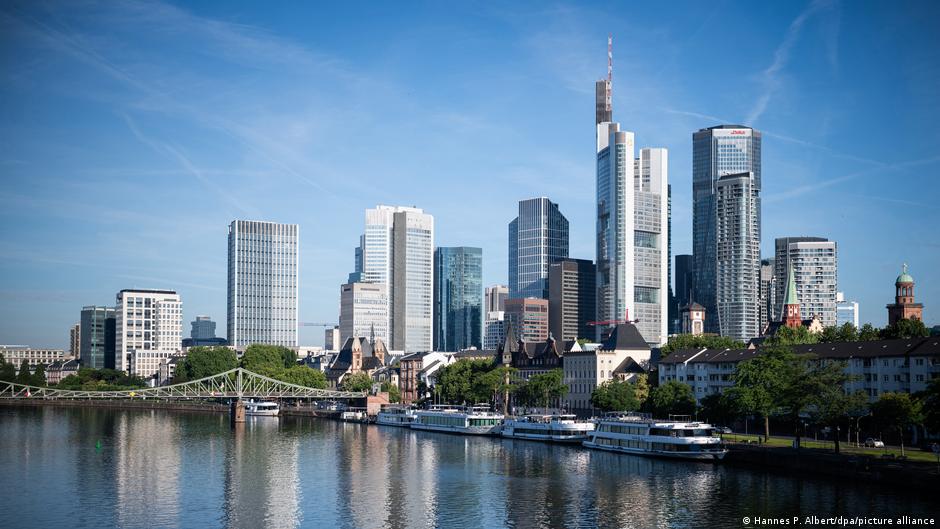
On Thursday, prominent German economic think tanks announced an increase in their GDP growth predictions for the country. The latest forecast anticipates a rise of 1.3% for 2026, a significant increase from the previous spring forecast of 0.6% growth.
Read More
In their "Autumn 2026 Joint Economic Forecast," titled "Recovery Under Structural Stress — Fiscal Policy on Slippery Ground," five institutes also revised their outlook for 2027, predicting 1.1% growth. However, growth is expected to slow to just 0.4% in 2028.
Oliver Holtemöller from the Leibniz Institute Halle (IWH) noted, "The economy saw more robust development than expected. Still, that upturn rests on a rather wobbly foundation because high energy prices and structural problems continue to be a burden."
Experts acknowledge a clear upward trend, although they emphasize that the recovery is weaker compared to previous economic rebounds. Analysts attribute part of the growth to a strong global economy and advancements in AI, but they also point out that corporate investment and private consumption are still lacking.
Looking ahead, economists predict increased consumer spending and a revival in housing construction for 2027. The Organization for Economic Cooperation and Development (OECD), which primarily includes wealthy nations, has also revised its forecast for Germany, now estimating a 1.1% GDP growth this year, up from 0.7% in June, and matching the growth prediction for 2027.
Despite the cautious optimism presented in the report, many economists caution that increased government investment in infrastructure and defense, primarily funded by new debt, may not be sustainable without accompanying reforms. Chancellor Friedrich Merz expressed optimism regarding Germany's economic outlook, stating, "We're out of the valley of economic recession or decline."
The five institutes involved in the Joint Economic Forecast are: the German Institute for Economic Research, the IfO Institute, the Kiel Institute for Global Economics, the Leibniz Institute for Economic Research Halle, and the RWI-Leibniz Institute for Economic Research Essen.