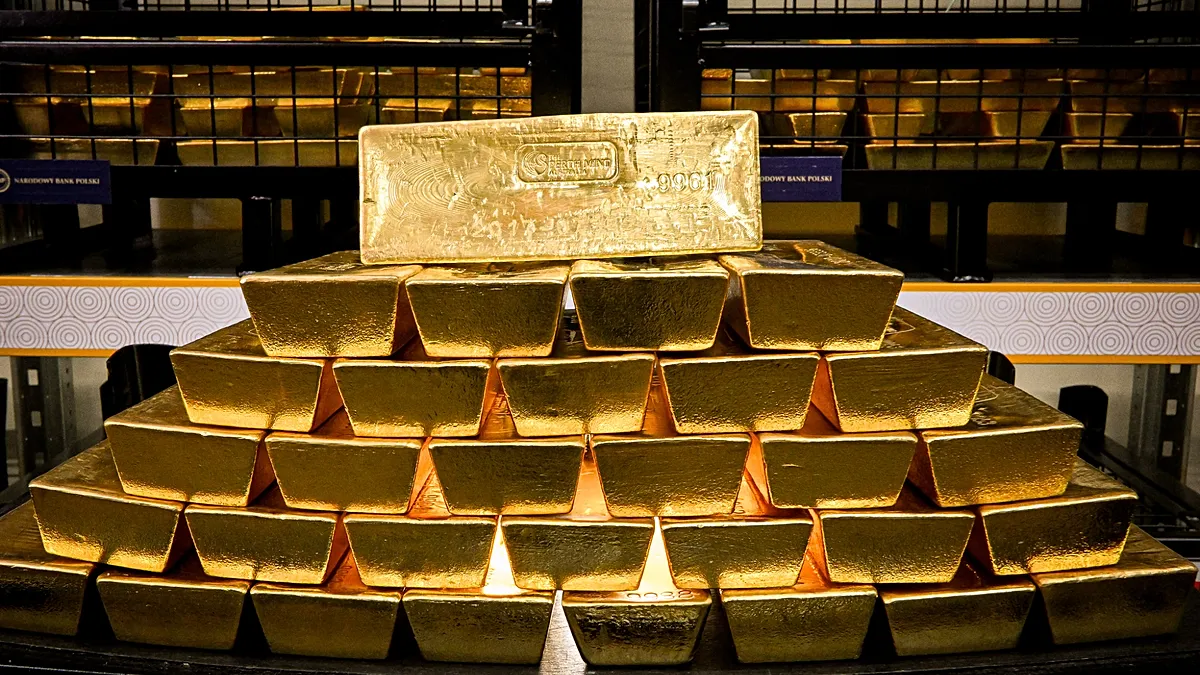
Russia has continued its trend of selling gold in 2023, with a reported reduction of approximately 6.2 tonnes in September, bringing the total reduction since January to around 62 tonnes. This marks one of the fastest sell-offs in Russia's modern history, second only to the 1998 period when it sold 118 tonnes in just three months.
Read More
Adam Stroniawski, managing director of Polish precious metals dealer Mennica Skarbowa, explained that Russia's budget shortfall, exacerbated by the ongoing war in Ukraine, has prompted this sell-off, particularly to fund its defense sector. He noted that these sales are occurring outside the London bullion market, primarily to China's central bank. Stroniawski suggested that the overall impact on global gold prices from these transactions would be negligible.
From January to July 2023, approximately 100 tonnes of Russian gold made its way to Hong Kong, nearly triple the amount from the same period the previous year. Stroniawski speculated that Russia could later re-enter the gold-buying market, similar to actions it took following its 1998 gold sales.
Kazakhstan, which was one of the leading gold purchasers in the first eight months of 2023, has also announced plans to reduce its gold reserves. The country intends to ensure that gold constitutes 75% of its total reserves by the end of the year. Stroniawski stated that this move could stem from a budget deficit or a desire to realize profits. He emphasized that Kazakhstan's long history of accumulating gold means current sales could come at a significant profit, and that the planned decrease will not significantly impact global gold markets.
The divergent strategies of Russia and Kazakhstan raise questions about potential trends among central banks. Poland, which has been increasing its gold reserves, might consider similar actions; however, Stroniawski deemed this unlikely. He pointed out that internal government and central bank policies in Poland are moving in different directions, making liquidating reserves improbable this parliamentary term. The National Bank of Poland has actively expanded its gold holdings and is nearing its target of 700 tonnes, a level that could enhance the country's credit standing without necessarily leading to immediate selling or halting purchases.
As for gold prices, Stroniawski noted that many investors who purchased gold in recent years may be contemplating profit-taking. Despite a rise of 25.5% in 2024 and 67.4% in 2025 in US dollar terms, gold prices fell by 4.4% in the first nine months of 2026. He believes that long-term trends remain upward, supported by central bank purchases and investor sentiment towards gold as a safe-haven asset. Stroniawski concluded that he did not foresee significant decreases in gold prices, suggesting that reliable profits are achievable only over extended periods.