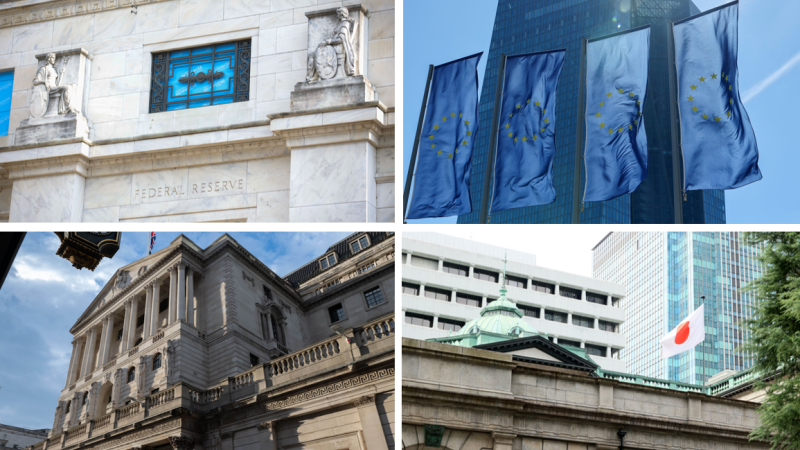
The Federal Reserve, European Central Bank (ECB), Bank of England, and Bank of Japan (BoJ) are all navigating complex economic conditions that could lead to changes in their monetary policies in the coming months.
Read More
Federal Reserve
The Federal Reserve raised its policy rate by 25 basis points (bp) during its September meeting, with only two FOMC members anticipating no further hikes. Four members indicated the need for rate increases in both October and December, while 12 expected just one more rate hike this year. Senior Fed officials have signaled a cautious approach, suggesting they may not hike rates at consecutive meetings. As a result, the upcoming FOMC meeting in October is expected to maintain the current policy. Market expectations lean toward a 25bp hike in December, influenced by ongoing elevated inflation and low unemployment. However, increases in Treasury yields and a stronger dollar are tightening monetary conditions, which could impact growth. Despite market predictions of an additional 50bp increase in 2027, our projections for inflation and employment suggest no further policy tightening will occur.
European Central Bank
A resilient eurozone economy and rising inflation could prompt another rate hike from the ECB, particularly in December. While the ECB typically prefers to release quarterly staff projections before making decisions on interest rates, the bond yield surge and France's fiscal situation will likely influence discussions. However, substantial pass-through of higher energy prices to the broader economy has been minimal, limiting the necessity for a hawkish stance. The rise in German bond yields since the last meeting is estimated to have had an effect equivalent to an additional 25bp rate increase on growth and inflation, with implications closer to a 50bp increase for France. This dynamic may lead some ECB officials to reconsider the urgency of further hikes.
Bank of England
The Bank of England is now expected to implement two rate hikes, one in November and another in February. Recent comments from officials suggest that the Bank recognizes the need to act, despite earlier insinuations that not reducing rates was effectively tightening policy. The upcoming November inflation forecasts may indicate a brief rise in CPI above 4%, potentially triggering a hike in light of historical patterns linking similar inflation levels to second-round effects. Nevertheless, with a relatively weak jobs market, the likelihood of significant wage growth responding to rising energy prices appears limited. This context indicates that cuts may be forthcoming by late 2027 and into 2028.
Bank of Japan
The market assigns low probabilities to a consecutive hike by the BoJ on October 30, following a recent increase to 1.25%. With two dissenters voicing concerns about the hike, the BoJ is expected to take time to assess the impacts of its recent policy actions. Nonetheless, the central bank remains vigilant to inflation risks and maintains an interest in achieving a terminal policy rate between 1.75% and 2.00% next year. Most market observers anticipate the next hike will occur in December, signaling a shift to a quarterly tightening cycle, which aligns with U.S. interests for the BoJ to support the July U.S.-Japan yen intervention. However, risks remain that the next hike could extend to January, allowing more time for economic monitoring ahead of expected domestic demand initiatives under Prime Minister Sanae Takaichi's government. There is slight preference for the subsequent hikes to be scheduled for January and April, just prior to a reduction in the consumption tax rate on food from 8% to 1%.