By Xinghui Kok
Read More
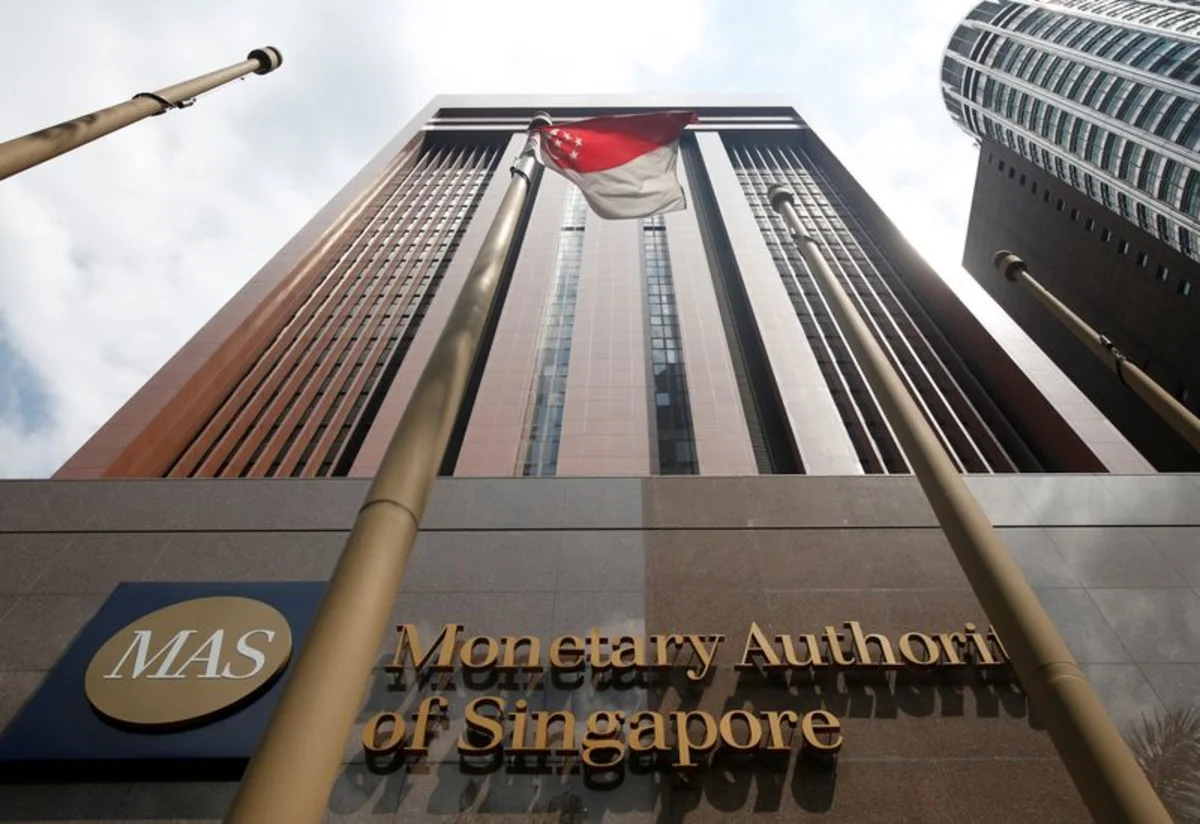
SINGAPORE, Oct 14 (Reuters) - Singapore's central bank maintained its current monetary policy settings on Wednesday, surprising analysts who anticipated a tightening, despite expectations for strong economic growth and a forecasted decrease in inflation by mid-2027. Unlike many countries that adjust domestic interest rates, the Monetary Authority of Singapore (MAS) manages monetary policy by adjusting the exchange rate of the Singapore dollar.
The MAS establishes a policy band for the Singapore dollar nominal effective exchange rate (S$NEER), which determines the strength or weakness of the local currency against those of its main trading partners.
Singapore’s method is influenced by its small, trade-reliant economy, where gross exports and imports of goods and services exceed three times the gross domestic product (GDP). Nearly 40% of spending in Singapore is on imports, making the exchange rate particularly impactful on inflation as opposed to domestic interest rates. For instance, an appreciation of the Singapore dollar against major trading partners' currencies lowers the costs of imported goods and services, thereby easing household expenses.
The S$NEER functions as an index representing the trade-weighted exchange rate of the Singapore dollar against its major trading partners' currencies. This approach enables the central bank to assess the collective performance of the Singapore dollar, which is crucial for determining general price levels within the country.
MAS does not control the exact level of the exchange rate in real time; instead, the S$NEER fluctuates within a designated policy band that is not publicly disclosed. If the exchange rate moves outside this band, MAS intervenes by either buying or selling Singapore dollars.
The policy band consists of three adjustable parameters: the slope, the level, and the width. Historically, these parameters were reviewed at least twice a year until 2024, with additional assessments made in response to immediate economic demands, such as the two off-cycle adjustments in 2022 due to high inflation. Beginning in 2024, MAS transitioned to quarterly monetary policy announcements to provide more timely evaluations of the economic situation.