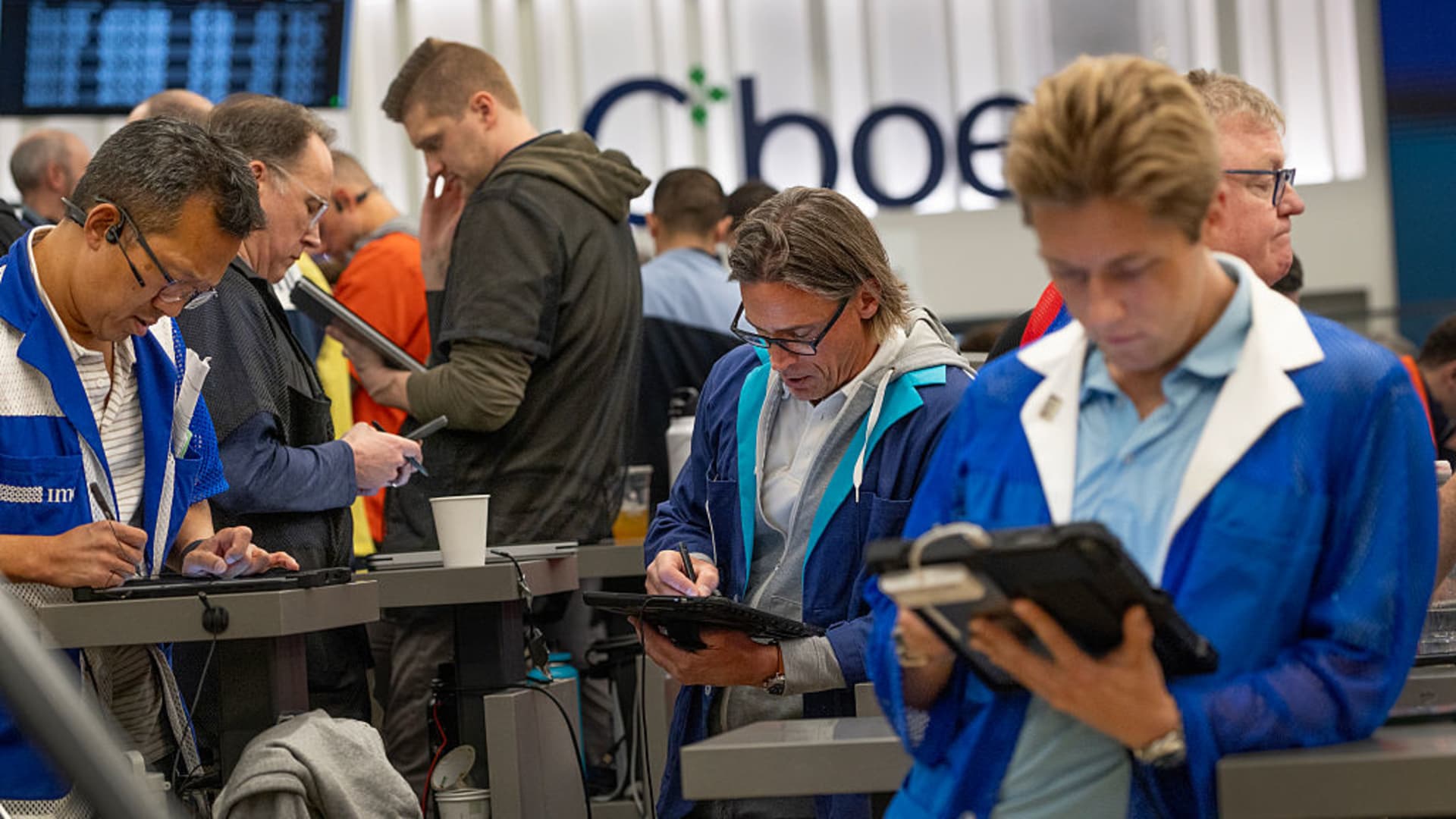
The Chicago Board Options Exchange (CBOE) Volatility Index, commonly known as the VIX, has fallen to its lowest level of 2026, reaching 14.2 on Friday. This decrease reflects a period of relative market stability, even as geopolitical tensions persist. However, market analysts caution that this calm may not last, particularly as the financial markets approach a historically volatile period from mid-August to mid-October.
Read More
The VIX measures anticipated market volatility over the next 30 days, using S&P 500 option prices. A lower VIX indicates a calmer market atmosphere. Year-to-date, the S&P 500 has risen approximately 16%, contributing to record highs across various equity benchmarks.
Jonathan Krinsky, managing director and chief market technician at BTIG, highlighted the risks of complacency as markets enter a historically turbulent time, especially in mid-term election years. He noted that from August 18 through mid-October, every mid-term election year since 1990 has seen the equal-weight S&P index experience a pullback of at least 7% from its average peak.
Krinsky described 2026 as an unusual year for the stock market, pointing out that there has been no day with 80% downside volume since last October, a significant departure from the historical average of 21 such days each year. Concurrently, long-end Treasury yields are at cycle highs, despite recent positive inflation data.
Commenting on the current market conditions, Krinsky recommended investors consider reducing risk or hedging their equity exposure as they navigate this precarious phase on the calendar.
In related observations, Axel Rudolph, chief technical analyst at IG, referred to the decrease in volatility as "substantial." He noted ongoing geopolitical risks, particularly surrounding the Middle East and the Strait of Hormuz, while emphasizing the unexpected 0.6% decline in U.S. retail sales in July that suggests consumers may be starting to feel economic pressures.
Rudolph expressed concerns that investors might be overlooking underlying risks, stating, "Markets are starting to look a little too comfortable given the risks still lurking beneath the surface." He pointed out that low volatility combined with rising long-term Treasury yields indicates a more complicated situation than what the recent equity rally may suggest.