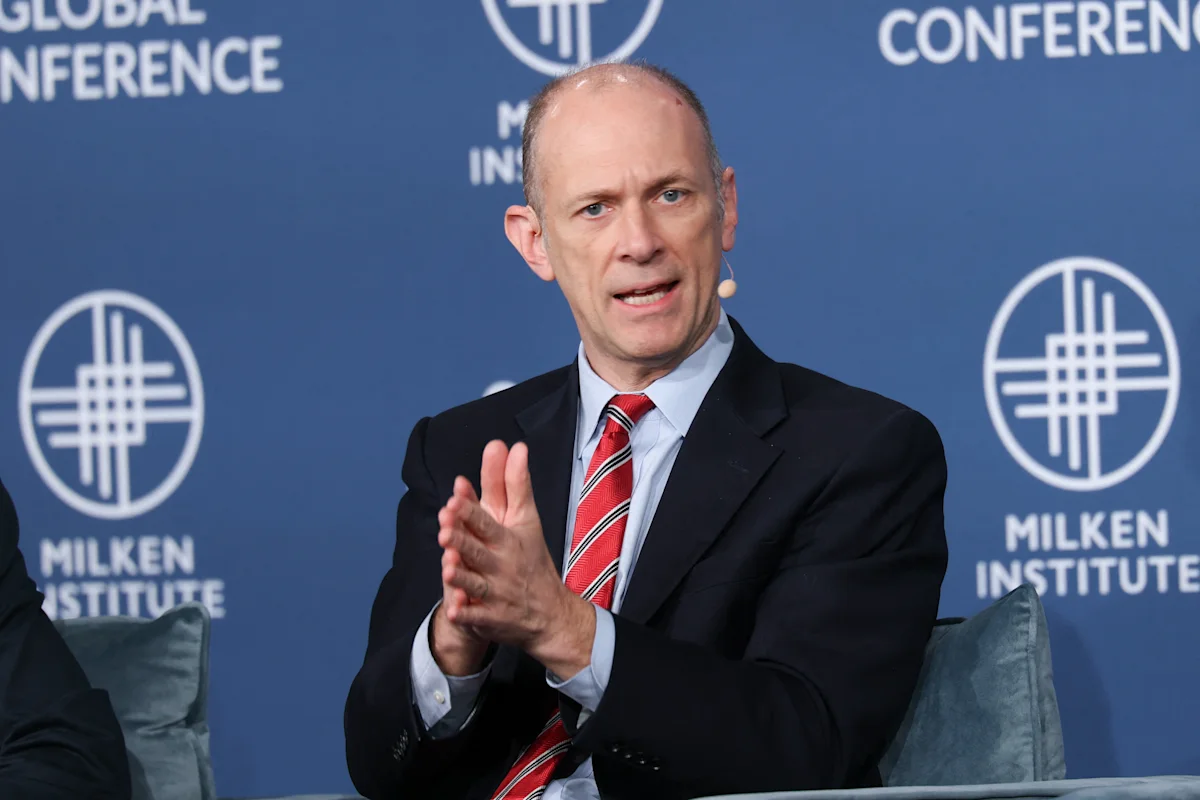
Austan Goolsbee, president of the Chicago Federal Reserve, stated that US consumer spending is driven by widespread economic strength across various income levels, and not merely by a booming stock market. In an interview with Yahoo Finance, Goolsbee noted, "It's very hard to have as strong consumer spending with numbers as we've been getting and not have it be broad-based."
Read More
The stock market is experiencing significant gains, with the S&P 500 up nearly 13% this year, largely due to optimism surrounding artificial intelligence and increased investment in that sector. Critics argue that the rising market primarily benefits higher-income consumers, which in turn boosts consumer spending. However, Goolsbee contended that spending gains are widespread among all income groups. He referenced Bureau of Labor Statistics data indicating that the bottom 90% of income earners represent approximately 75% of total spending in the US economy.
Supporting this, statistics from the New York Fed demonstrate that real spending growth over the past three years has been relatively uniform across income levels, with discrepancies between high- and low-income consumers amounting to just a 1 percentage point difference.
While acknowledging that stock ownership is disproportionately held by the wealthiest 10% of individuals, Goolsbee argued that if the stock market were the primary driver of consumer spending, there would be more significant variances in spending rates between this top tier and other earners. "You would be seeing bigger differences in the spending rates of the top 10% compared to everyone else than you have seen," he asserted.
The Fed's Beige Book, which gathers anecdotal evidence from its regional banks, presents a more divided view of consumer spending. It reported that over half of the Fed's 12 regional districts identified higher-income households as the main drivers of consumer spending. In Dallas, for example, while retail sales appeared robust, there were indications that lower-income consumers were exercising caution in their spending.
Goolsbee also expressed concerns about potential speculative bubbles in the market, particularly due to the growing hype surrounding AI. He warned that inflated stock valuations could lead consumers to spend beyond their means, which might strain the economy and contribute to inflation. "When you do that, you can overload the capacity in the short run of what the economy can handle, and you can generate inflation," he said.