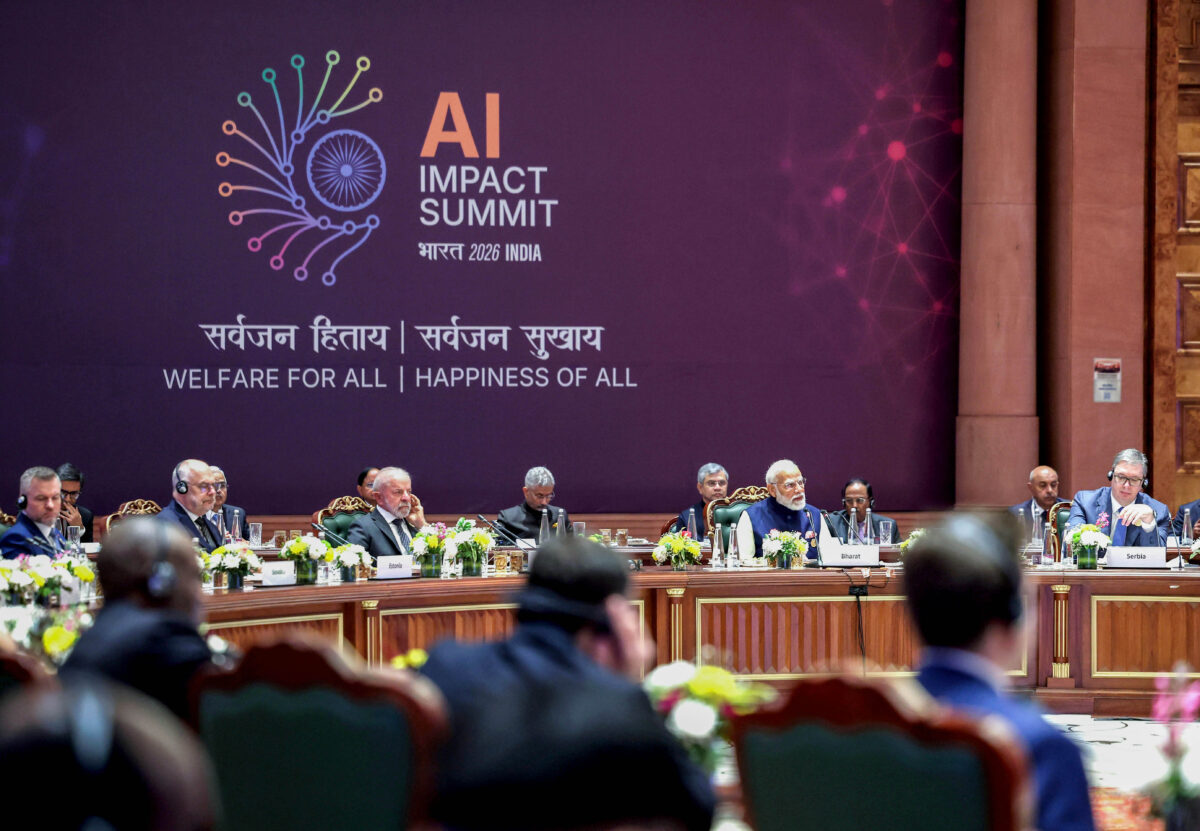
Artificial intelligence (AI) is transforming the economics of development by providing an affordable and scalable input for production processes. As organizations increasingly adopt AI, it is crucial for governments to facilitate the diffusion of productivity gains across the economy. In India, the government’s 2025–26 Economic Survey indicates that AI adoption is primarily concentrated in digitally advanced service sectors, raising concerns about how these benefits may extend to broader segments of the economy.
Read More
Merely adopting new technologies does not automatically lead to productivity gains. Significant economic advantages from these technologies are realized only when companies redesign workflows, reorganize production, and cultivate complementary skills. Therefore, supporting organizational changes is essential for translating AI adoption into real productivity growth.
Unlike the manufacturing-led growth models seen in East Asia, India’s economic growth is largely service-driven, with manufacturing constituting about 12 percent of employment. To achieve structural transformation, India needs to bolster its manufacturing base, generating 8 million jobs annually for the next 10 to 12 years. This effort will necessitate increasing manufacturing's GDP share as the nation aims to become developed by 2047. While AI poses a risk of automation in routine tasks, it also provides opportunities to enhance manufacturing competitiveness through improved productivity.
Modern manufacturing increasingly relies on knowledge-intensive services such as software, design, predictive maintenance, and production analytics. By leveraging AI capabilities, Indian firms can fuse service elements into manufacturing, enhancing their quality and innovative capacity, thereby enabling them to climb global value chains and increase output.
Though automation might reduce labor demand for specific tasks, it can also decrease production costs and create new complementary roles. However, these changes may not occur simultaneously. Workers displaced by automation might face difficulties acquiring new skills for emerging roles, leading to short-term adjustment costs and potentially weakening aggregate demand during the transition.
AI exposure is not a straightforward indicator of labor-market risk; exposure doesn’t necessarily lead to job displacement. In some positions where AI is integrated, it may actually enhance worker capabilities, while in others, the risks of substitution are notable.
In India, over 40 percent of the workforce is engaged in agriculture, with around 12 percent in construction. These sectors rely predominantly on manual tasks and have low direct exposure to AI. Conversely, sectors like information technology, finance, and professional services show high levels of AI exposure, though they make up a small fraction of overall employment. Within these sectors, much of the exposure is complementary, with less than 10 percent of jobs classified as high exposure but low complementarity, which poses the greatest displacement risk. This includes routine cognitive roles in clerical work, data processing, and certain software development tasks.
The immediate challenge for India seems to be avoiding exclusion from AI-related productivity gains, rather than widespread displacement, as a significant portion of the workforce operates in low-exposure sectors. However, this dynamic may shift as AI technology and adoption escalate.
Economist Daron Acemoglu emphasizes that the trajectory of work depends on policy choices. Implementing the 'right kind of AI' can enhance worker roles and create new tasks, while the 'wrong kind' can lead to job loss. India’s policies should aim to direct AI towards objectives that promote productivity, inclusiveness, and entrepreneurship, as detailed in a policy brief for the Indian Council for Research on International Economic Relations.
Enhancing productivity allows companies to scale operations, ascend value chains, and thrive in export markets, especially benefiting small- and medium-sized enterprises (SMEs). Ensuring inclusion guarantees that productivity increases reach beyond leading firms, while facilitating entrepreneurship makes advanced capabilities more accessible for startups.
However, AI adoption faces significant hurdles varying across India’s economic landscape. In informal sectors, insufficient digital skillsets and weak connections with formal institutions hinder workers' access to AI. Even when AI technologies are accessible to SMEs, the costs, technical know-how, and organizational capabilities necessary for integration can be daunting. In digitally mature sectors, the focus must be on continuously evolving workers’ skills in line with AI advancements.
India’s development of digital public infrastructure, which provides essential services online, serves as a model for subsequent AI deployment. The establishment of universal payment infrastructure has streamlined digital transactions by minimizing fragmentation across networks. While AI may require a different framework, the core idea remains: overcoming adoption barriers across the economy is essential for expediting technology diffusion. This approach calls for targeted strategies, including enhancing digital skills in labor-intensive industries, lowering the financial and technical obstacles to AI adoption for SMEs, and supporting ongoing upskilling in advanced sectors.
Addressing these challenges involves recognizing AI diffusion as a distinct policy goal, alongside building domestic AI capabilities and resilience. These two aims are interrelated; investments in research and technology bolster local capacity, while diffusion ensures technologies contribute to pervasive productivity growth. Consequently, India’s development strategy must align investments at the technological forefront with a focus on broadening the adoption and impact of emerging technologies. The goal is not merely to establish the world's most advanced AI systems but to cultivate the most effective strategy for technology diffusion.